24 Nov 2025
- 0 Comments
On the final day of the Dubai Air Show 2025Al Maktoum International Airport, a tragic accident claimed the life of Wing Commander Namansh Sial, a 34-year-old Indian Air Force pilot, during a low-altitude aerobatic maneuver. The crash occurred at approximately 2:10 p.m. local time on November 21, 2025, sending shockwaves through India’s defense community and the global aviation world. The Indian Air Force (IAF) confirmed the loss of its brave pilot, who was representing India’s indigenous Tejas Light Combat Aircraft (LCA Mk-1) — a symbol of national pride and technological ambition. He didn’t just fly the jet; he embodied its promise.
A Pilot Who Carried the Nation’s Hope
Wing Commander Namansh Sial hailed from Nagrota Bagwan, a quiet village in Kangra district, Himachal Pradesh. Born in 1991, he joined the IAF on December 24, 2009, after graduating from the National Defence Academy and the Air Force Academy. He flew MiG-21s and Sukhoi Su-30 MKIs before being selected for the elite No. 45 Squadron 'Flying Daggers', the first operational unit to fly the Tejas. His selection wasn’t random — it was recognition of his discipline, precision, and calm under pressure. Colleagues described him as the kind of pilot who’d stay late to review flight data, who’d mentor younger cadets, and who never missed a single detail.
At the Dubai Air Show, he wasn’t just performing. He was proving something — that India could build a world-class fighter jet, and that Indian pilots could fly it with the same mastery as any NATO pilot. The Surya Kiran Aerobatic Team had already dazzled crowds with their synchronized routines. Now, Sial was set to showcase the Tejas in its most demanding role: a solo low-altitude display, where every millisecond counts. The crowd of over 150 nations watched. The world was watching.
The Final Moments
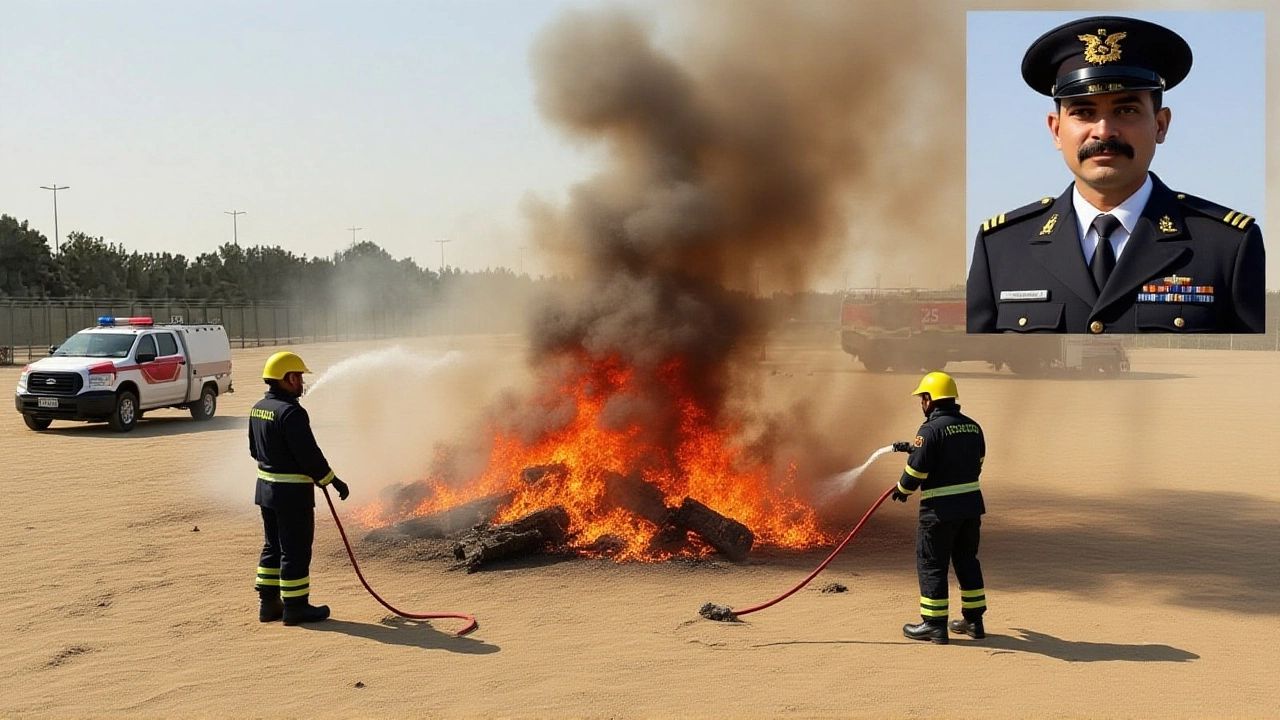
Video footage from the crash site, later verified by IAF investigators, shows the Tejas banking sharply at low altitude — then suddenly rolling violently. Witnesses reported the aircraft skimming dangerously close to the ground before it spiraled. Sial, in those final seconds, didn’t panic. He fought the jet. He tried to regain control. Only when it became clear the aircraft was unrecoverable did he activate the ejection seat. But altitude was too low. Time was too short. The ejection sequence completed, but the parachute didn’t have enough room to deploy fully.
Experts say this is the cruel reality of low-level aerobatics. At 200 feet, you have less than two seconds to react. The Tejas has an excellent safety record — only one prior fatal accident since its 2016 induction. That makes this loss even harder to bear. “He didn’t eject because he lost control,” said a senior IAF officer familiar with the investigation. “He ejected because he gave the jet every chance to recover — and only when he knew it wouldn’t.”
A National Mourning
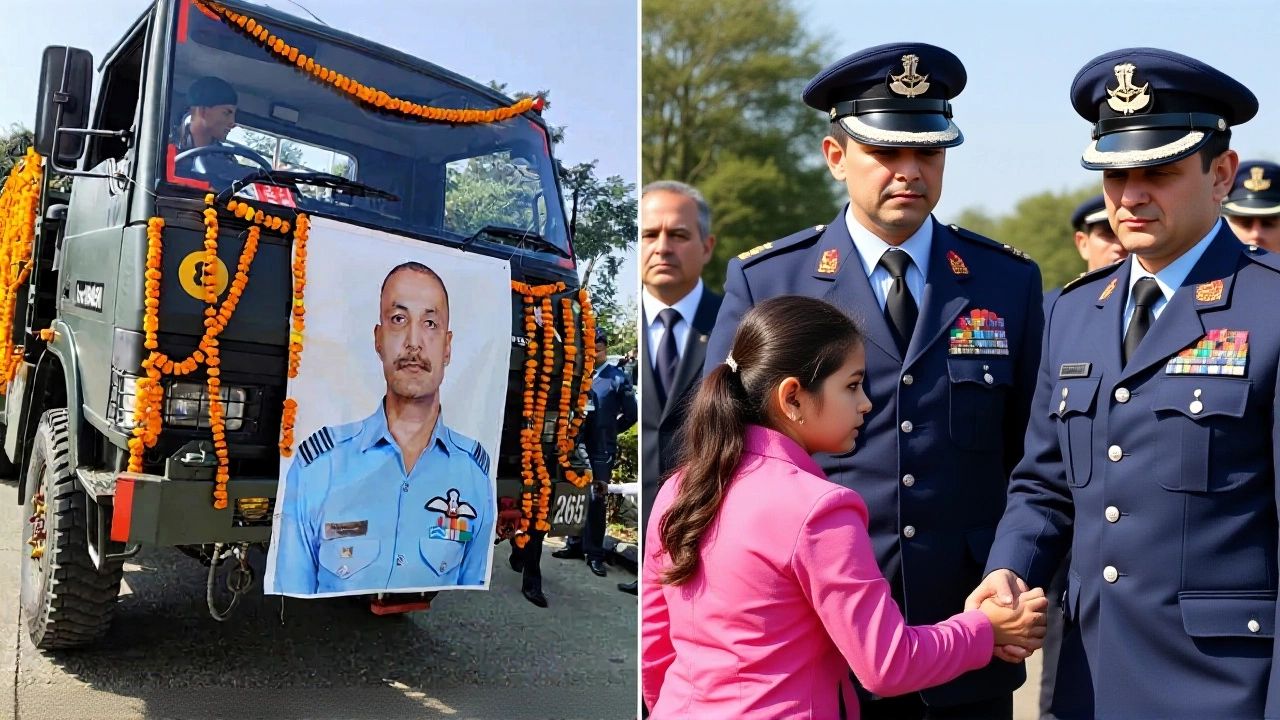
His body was repatriated on November 22, 2025, arriving at Hindan Air Force Station before being flown to his home state. On November 23, his funeral procession reached Kangra Airport, where a sea of people — soldiers, students, farmers, children holding flags — stood in silent tribute. His body was then taken to Nagrota Bagwan, where his father, Jagannath Sial, a retired Army officer turned school principal, stood weeping but proud. His wife, also an IAF officer, held their infant daughter as the national flag was folded and presented.
Himachal Pradesh Chief Minister Sukhvinder Singh Sukhu called him “a son of the mountains who soared higher than any peak.” Defense Minister Rajnath Singh announced a full court of inquiry, emphasizing that the Tejas program would continue — but with renewed focus on safety protocols for display flights. The IAF has temporarily suspended all public aerobatic demonstrations involving the Tejas until the inquiry concludes.
Why This Matters Beyond the Crash
This wasn’t just the loss of a pilot. It was the loss of a symbol. The Tejas was meant to replace aging MiG-21s, reduce dependence on foreign fighters, and put India on the global defense map. Sial wasn’t just flying a jet — he was flying the future. His death has ignited debate: Should high-risk aerobatics be part of defense diplomacy? Is the pressure to showcase indigenous tech worth the human cost?
But here’s the thing — Sial knew the risks. He chose them. He believed in the machine. He believed in the mission. And now, his legacy isn’t just in the Tejas program — it’s in every cadet who watches his final flight and thinks, “I want to be like him.”
What Comes Next
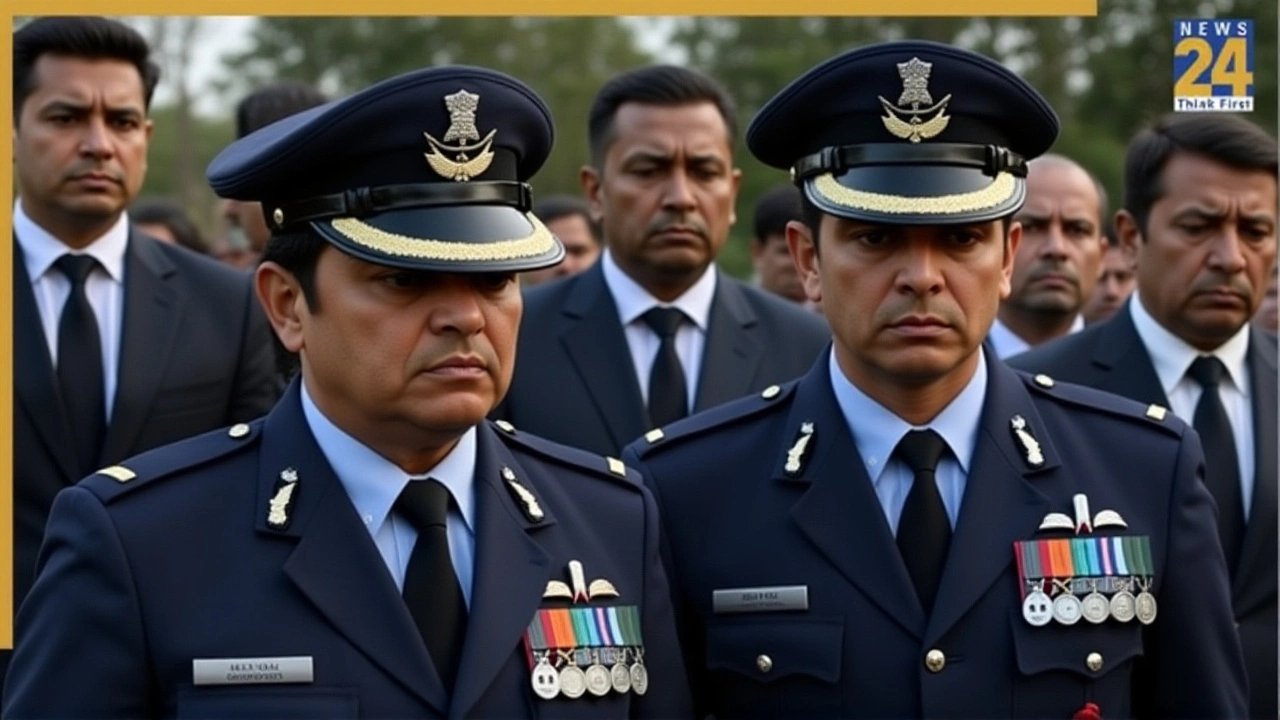
The court of inquiry, led by a senior Air Marshal, will examine flight data, maintenance logs, and pilot health records. Preliminary reports suggest no mechanical failure — but the human factor remains under scrutiny. Meanwhile, the IAF is reviewing its display flight guidelines. The Tejas program, despite this tragedy, remains on track: over 160 jets have been ordered, with deliveries continuing through 2030.
At the next air show — whether in Bengaluru or Bahrain — the Tejas will fly again. And when it does, the world will remember Wing Commander Namansh Sial. Not because he died, but because he lived with purpose.
Frequently Asked Questions
How did Wing Commander Namansh Sial die?
Wing Commander Namansh Sial died during a low-altitude aerobatic maneuver at the Dubai Air Show 2025 when his Tejas LCA Mk-1 jet crashed at Al Maktoum International Airport on November 21, 2025. He ejected too late due to insufficient altitude, despite attempting to regain control of the aircraft. The Indian Air Force confirmed no mechanical failure, and the incident is under formal inquiry.
What is the significance of the Tejas fighter jet in India’s defense strategy?
The Tejas LCA Mk-1 is India’s first indigenously designed and manufactured multirole fighter jet, developed by DRDO and HAL. It was commissioned in 2016 to replace aging MiG-21s and reduce reliance on foreign suppliers. With over 160 ordered and production ramping up, it’s central to modernizing the IAF. Sial’s role as a display pilot was symbolic — proving its reliability on the global stage.
Has this been the first Tejas crash since its commissioning?
No. This is the second fatal accident involving the Tejas since its induction into active service in 2016. The first occurred in 2021 during a training flight in Karnataka, also resulting in the death of a pilot. Both incidents are under investigation, and no pattern of systemic failure has been confirmed. The Tejas maintains a 95% mission readiness rate, higher than many comparable jets.
Why was Sial flying the Tejas at the Dubai Air Show?
Sial was selected to fly the Tejas at Dubai because of his exceptional record in the No. 45 Squadron 'Flying Daggers' — the IAF’s first operational Tejas unit. The air show was a strategic showcase of India’s defense capabilities. His performance in Guwahati earlier that month impressed officials, making him the natural choice to represent the jet internationally — a high honor and a significant responsibility.
What is the status of the investigation into the crash?
The Indian Air Force has formed a full court of inquiry, led by a senior Air Marshal, to examine flight data, maintenance records, pilot health, and procedural compliance. Preliminary findings suggest no equipment malfunction, but the decision to conduct such a low-altitude maneuver at an international air show is under review. The report is expected in early 2026, and IAF has paused all Tejas display flights pending its conclusion.
How is the Indian Air Force honoring Wing Commander Namansh Sial?
Sial has been posthumously awarded the Vayu Sena Medal for gallantry. His name will be engraved on the IAF’s Memorial Wall at Hindan Air Force Station. The No. 45 Squadron will fly a missing man formation in his honor at every major event. His family has been granted full military benefits, and a memorial scholarship for aspiring pilots from Himachal Pradesh has been announced in his name.